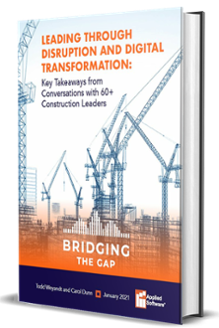
Uncertainty has always been part of the construction industry. Today, however, adapting to uncertainty in construction is becoming a driver of business success. From labor shortages and supply chain disruptions to fluctuating material costs and evolving regulations, the industry faces constant challenges. Yet, companies can thrive in this business environment by embracing innovation, especially through technology, AI, and strategic change management.
Whether as a way of life or as a way of doing business, construction has never been easy. So innovation has always been essential. Successful tech adoption begins with assessing where the company stands and what processes need to be improved. Simplicity often overcomes complexity, and scalable solutions are driven by economic realities. A grounded approach to innovation helps leaders move from pilot projects to impactful, long-term transformation.
Balancing Priorities with Needs
Technology adoption works best when companies align their top priorities with actual issues faced on the jobsite. Understanding what peers are investing in can help validate internal strategies without falling into the trap of imitation. Each company’s innovation roadmap should reflect its unique challenges and goals. An outside perspective—whether from industry peers or tech partners—can help provide clarity and confidence in decision-making.
Demonstrating Value to Stakeholders
One of the most overlooked aspects of tech adoption is stakeholder communication. It’s not enough to roll out new tools. Leaders must clearly explain how the new technologies improve individual roles—from estimators and project managers to CFOs. Sharing real-world wins helps obtain buy-in and build momentum. Tailoring the message of success to each team member is key to driving adoption and enthusiasm.
Perfecting the Flow of Information
Data silos reduce a company’s agility. Integrating systems between the office and field ensures that the people who need insights can get them at the appropriate time. When information flows freely, teams can work and collaborate more efficiently to improve profitability. AI can play a pivotal role in the process—helping analyze bids, identify risks, and reduce downtime.
Navigating Change Management
Change management is the bridge between innovation and impact. Leaders need to guide their teams through transitions with empathy and transparency. Transforming processes in increments—rather than sweeping overhauls—helps minimize disruption, while building trust. It’s important to align teams and support innovation, especially in areas like sustainable construction.
Looking Ahead
For companies to remain competitive, construction leaders need to stay informed on industry trends, economic forecasts, and regulatory shifts. Researching opportunities and learning from peers who have successfully adopted technology can help give direction for the path forward. AI has gone beyond being a futuristic concept to serving as a practical tool that can elevate human work, enhance strategic thinking, and help companies navigate uncertainty with more confidence.
In an industry that was built on precision and planning, navigating change can form a new foundation for success. By balancing priorities, demonstrating value, perfecting information flow, and managing change effectively, construction companies can turn uncertainty into opportunity and build a more resilient future industry.

For more insights on adapting to uncertainty in construction, listen to Bridging the Gap podcast, episode 320 with guest Dustin Stephens “Adapting to Uncertainty in Construction: Technology, AI, and Change Management”.
RESOURCES